🇰🇷 Busan vs Taipei for digital nomads 🇹🇼
If you are weighing up Busan vs Taipei as a remote-work base, the short version is this: Busan costs about 5% less per month, and the rest comes down to what you actually want from a city.
Busan is in South Korea, Taipei in Taiwan, which matters more than it sounds: it changes your visa options, your tax exposure and how easily you can hop home for a wedding.
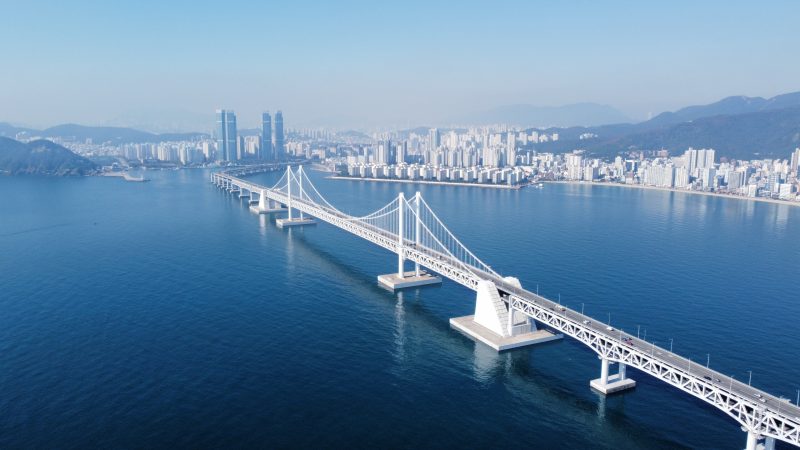

Short answer
You are paying $100 a month extra for Taipei, and in exchange you get a higher overall nomad score (4.4/5 vs 4.1/5). Whether that trade is worth it depends on how tight your budget is.
| Metric | 🇰🇷 Busan | 🇹🇼 Taipei |
|---|---|---|
| Monthly cost | $1,800 ✓ | $1,900 |
| Nomad score | 4.1/5 | 4.4/5 ✓ |
| Internet | 4.8/5 | 4.8/5 |
| Safety | 4.8/5 | 4.8/5 |
| Walkability | 4.4/5 | 4.6/5 ✓ |
| Fun & nightlife | 4.4/5 | 4.5/5 ✓ |
| Weather | 4.1/5 ✓ | 3.9/5 |
| Air quality | 3.6/5 ✓ | 3.5/5 |
Cost of living: Busan vs Taipei
Start with money. Living in Busan costs around $1,800 a month; Taipei asks about $1,900 for the same standard of living. That is a 5% difference, or $1,200 a year — enough to fund several months of travel, a serious gear upgrade, or simply a much shorter runway to worry about. Both numbers assume the same basket — a one-bed flat, cooking at home most nights with a few meals out, getting around locally, mobile data and a coworking membership. Short lets and central districts push the number up; a longer lease signed locally usually pulls it well down.
Time zones and the working day
The time difference between Busan and Taipei is 1 hours — Busan runs on UTC+9 and Taipei on UTC+8, putting Busan ahead. A standard 9–6 working day still overlaps by about 8 hours, so switching between the two barely disturbs a European or same-region client schedule.
Internet and wifi for remote work
Internet is a tie: both Busan and Taipei rate 4.8/5 on our connectivity score, which blends typical home fibre speeds, mobile data quality and how easy it is to find a café or coworking space you can actually take a video call from. At that level you can treat Busan as fully reliable for client calls, large uploads and remote onboarding without a backup plan.
Safety, walkability and nightlife
Both cities rate 4.8/5 for safety, so neither should worry a first-time solo traveller more than the other. On walkability Taipei takes it at 4.6/5 against 4.4/5, which in practice decides whether you can live without a car or a daily ride-hail habit. For nightlife, events and the general odds of meeting people, Taipei scores 4.5/5 to Busan’s 4.4/5.
Weather and air quality
Busan has the better climate for year-round remote work, 4.1/5 against 3.9/5 — our weather score rewards mild shoulder seasons and penalises long stretches you would rather not be outside in. Busan sits noticeably further from the equator than Taipei (35° against 25°), which usually means sharper seasons, shorter winter days and a bigger gap between your best and worst months. Air quality is comparable, at 3.6/5 and 3.5/5.
Visas and how long you can stay
This is where the two genuinely diverge. South Korea offers a long-stay route for remote workers, valid 1 year, extendable to 2 (F-1-D Workation) and requiring around $5,000 a month in proven income. Taiwan offers a long-stay route for remote workers, valid 6 months, extendable to 2 years and requiring around $3,330 a month in proven income. Always confirm current rules with the relevant consulate before you book anything long.
Busan vs Taipei: the verdict
- Choose Busan if your priority is stretching your runway — it is the cheaper base at $1,800 a month, saving you $1,200 a year.
- Choose Taipei if you want the higher all-round score (4.4/5 against 4.1/5) and are willing to pay for it.
- If daily life on foot matters, Taipei is built better for it. Weather-sensitive? Busan scores higher across the year.
Dig deeper on each city
Useful next: the meeting time-zone planner, the digital nomad visa index, and how to get paid while working abroad.
Ready to go? Set up for Busan or Taipei
Whichever you choose, here's the remote-work kit worth sorting before you land:
Some links are partner links — we may earn a commission at no cost to you.
Busan vs Taipei: frequently asked questions
Is Busan or Taipei cheaper for digital nomads?
Busan is cheaper, at roughly $1,800 a month against $1,900 for Taipei — a difference of $1,200 a year. Those are full monthly budgets, not rent alone: a one-bed flat, food, getting around, mobile data and a coworking desk.
What is the time difference between Busan and Taipei?
1 hours. Busan is on UTC+9 and Taipei is on UTC+8, and a normal 9–6 working day overlaps by about 8 hours.
Which has better internet, Busan or Taipei?
They are evenly matched, both rating 4.8/5 on our connectivity score.
Which is safer, Busan or Taipei?
Both score 4.8/5 for safety, so there is little to separate them.
Busan or Taipei — which is better overall for remote work?
Overall, Taipei leads with a 4.4/5 nomad score against 4.1/5 for Busan. But the right base depends on your priorities: cost, climate, safety, community or visa access. The full breakdown above splits it metric by metric.
Can I get a digital nomad visa for Busan or Taipei?
South Korea offers a long-stay route for remote workers, valid 1 year, extendable to 2 (F-1-D Workation) and requiring around $5,000 a month in proven income. Taiwan offers a long-stay route for remote workers, valid 6 months, extendable to 2 years and requiring around $3,330 a month in proven income.
Which has better weather, Busan or Taipei?
Busan rates 4.1/5 for climate and Taipei 3.9/5, with air quality at 3.6/5 and 3.5/5 respectively.
Related comparisons
Still shortlisting? These are the other head-to-heads people run against Busan and Taipei:
- Seoul vs Busan
- Taipei vs Taichung
- Busan vs Jeju City
- Taipei vs Kaohsiung
- Busan vs Daegu
- Taipei vs Tainan
- Busan vs Gwangju
- Hualien vs Taipei
- Bangkok vs Busan
- Bangkok vs Taipei
- Busan vs Canggu
- Canggu vs Taipei
Popular Asia comparisons
- Chiang Mai vs Da Nang
- Chiang Mai vs Kuala Lumpur
- Chiang Mai vs Las Palmas
- Chiang Mai vs Medellín
- Chiang Mai vs Prague
- Chiang Mai vs Taipei
- Chiang Mai vs Tokyo
- Taipei vs Valencia
Or browse all 2066 matchups on the city comparison index.